where:
About Me
- artandhockey
- Split personality. Liking the arts, especially opera, and hockey and Los Toros. I know, I know THAT one is non pc currently. But I can't help it saw some in Spain and got hooked, but good. But on the other hand right now opera and hockey are in the forefront!
Pages
Showing posts with label HGO. Show all posts
Wednesday, September 7, 2011
Friday, February 18, 2011
Thursday, January 20, 2011
Dead Man Walking..add this
and walking, and walking!
I had the privilege to attend the final dress rehearsal of Heggie's opera based on the novel (also made into a movie) by Sister Prejean,and afterwards the dead man kept walking. In my mind and in my soul!
The subject is not merely sensational, it certainly causes emotions beyond the visceral.
The visceral does appear first
One feels Sister Helen Prejean is predisposed to champion the murderer.
Which seems an affront to the desolated parents.
But as the work progresses one comes to realize that belief in God's mercy has a valid presence.
That the death of the murderer does not replace the lives of two slain youngsters.
And it does force one to confront the controversial subject of the death penalty.
.
Phillip Cutlip, as De Rocher, manages rather well portraying a crude, defiant man, unrepenting until the very end, when strapped down, he does express his sorrow for the parents.
Suzanne Mentzer, as mother of the slain girl, strikes just the right vocal balance singing with emotional impact.
The cast, comprised of a large children's chorus, extras and
many cameo roles filled adequately, does surprise one with its size. Somewhat unexpected.
(And therein lies a problem, for me at least.
An opera/movie can only make a bald and fixed statement.
It may lack the shadings and interpretations the reader can bring to the book.
Although a musical work can help that some.
The composer, through his choice of music can emphasize emotions, events and actions.
But it is, again, HIS choice).
But I digress, so back to the cast:
Measha Brueggergosman as Sister Rose displayed a pleasant sound, but was IMHO,
too often drowned out by the music and scarcely audible.
Now, this could be due to the fact, that some singers do not sing at full power in rehearsals.
Beau Gibson, as Father Grenville, disappointed me (see above note re rehearsal)
but others may find his voice pleasantly adequate.
Hector Vasquez sang the Warden with a suave and rich baritone sound.
Old and new Studio artists acquitted themselves well.
Michael Sumuel as the forgiving motor cycle cop,
and Jon Kolbet as one of the fathers.
Brittany Wheeler, Kiri Deonarine and Boris Dyakov blended well with the others.
Maestro Summers kept polishing and tweaking orchestral sounds after the intermission,
in order to bring out the best of Heggies' music.
Ah yes, the music.
Strong, sometimes overpowering.
Full crescendo to suit the emotions on stage.
I think I heard a soupcon of Gershwin, a bit of Bernstein here and there.
There was some borrowing of gospel music, some of American folk and pop tunes.
Some subtly hidden, some openly copied.
Sister Prejean's music was ethereal. Wavering, as her 'human' disgust of the murderer made her doubt that she could help him find solace and salvation. But also firmly expressive conveying 'her' conviction in a merciful God.
I admit feeling a bit inadequate to put into words what I experienced whilst listening and watching.
The subject is controversial for sure.
When looking at the instant comments I see several hmpfs..
While I appreciate that you have read this post...thank you!...
I would like to know what makes you, chers readers, say hmpf.
Do you dislike any subject but hockey?
Do you dislike my impressions?
I would like to know. Afterall, opera causes subjective reactions.
What I experience you may not and vice versa!
So grit your teeth and write in a real comment.
I had the privilege to attend the final dress rehearsal of Heggie's opera based on the novel (also made into a movie) by Sister Prejean,and afterwards the dead man kept walking. In my mind and in my soul!
The visceral does appear first
There is some nudity, violence and profanity.
Compared to what one sees on TV and elsewhere, it's relatively minor.
One feels, as did the parents of the youngsters slain by De Rocher, a thirst for 'biblical' revenge!
One feels Sister Helen Prejean is predisposed to champion the murderer.
Which seems an affront to the desolated parents.
But as the work progresses one comes to realize that belief in God's mercy has a valid presence.
That the death of the murderer does not replace the lives of two slain youngsters.
And it does force one to confront the controversial subject of the death penalty.
As I have neither read the novel, nor seen the movie,
I came to this work innocent of any preconceived ideas.
What impressed me the most:
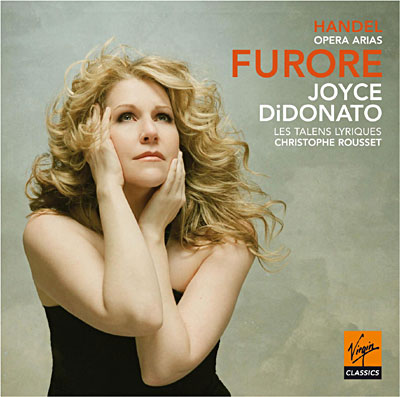
The truly spectacular 'tour de force' by Mezzo Joyce DiDonato as Sister Prejean. A role she fills with extraordinary beauty of expression, vocally and as an actor. She is on stage almost the whole time. She produces sounds that seem otherworldly...reaching heights I did note expect to
hear from a Mezzo.
Frederica von Stade, in one of her farewell appearances, sings De Rocher's Mother with a clarity of diction, that makes surtitles superfluous, in the photo she is pictured with Jake Heggie, the composer:
Phillip Cutlip, as De Rocher, manages rather well portraying a crude, defiant man, unrepenting until the very end, when strapped down, he does express his sorrow for the parents.
Suzanne Mentzer, as mother of the slain girl, strikes just the right vocal balance singing with emotional impact.
The cast, comprised of a large children's chorus, extras and
many cameo roles filled adequately, does surprise one with its size. Somewhat unexpected.
(And therein lies a problem, for me at least.
An opera/movie can only make a bald and fixed statement.
It may lack the shadings and interpretations the reader can bring to the book.
Although a musical work can help that some.
The composer, through his choice of music can emphasize emotions, events and actions.
But it is, again, HIS choice).
But I digress, so back to the cast:
Measha Brueggergosman as Sister Rose displayed a pleasant sound, but was IMHO,
too often drowned out by the music and scarcely audible.
Now, this could be due to the fact, that some singers do not sing at full power in rehearsals.
Beau Gibson, as Father Grenville, disappointed me (see above note re rehearsal)
but others may find his voice pleasantly adequate.
Hector Vasquez sang the Warden with a suave and rich baritone sound.
Old and new Studio artists acquitted themselves well.
Michael Sumuel as the forgiving motor cycle cop,
and Jon Kolbet as one of the fathers.
Brittany Wheeler, Kiri Deonarine and Boris Dyakov blended well with the others.
Maestro Summers kept polishing and tweaking orchestral sounds after the intermission,
in order to bring out the best of Heggies' music.
Ah yes, the music.
Strong, sometimes overpowering.
Full crescendo to suit the emotions on stage.
I think I heard a soupcon of Gershwin, a bit of Bernstein here and there.
There was some borrowing of gospel music, some of American folk and pop tunes.
Some subtly hidden, some openly copied.
Sister Prejean's music was ethereal. Wavering, as her 'human' disgust of the murderer made her doubt that she could help him find solace and salvation. But also firmly expressive conveying 'her' conviction in a merciful God.
I admit feeling a bit inadequate to put into words what I experienced whilst listening and watching.
The subject is controversial for sure.
When looking at the instant comments I see several hmpfs..
While I appreciate that you have read this post...thank you!...
I would like to know what makes you, chers readers, say hmpf.
Do you dislike any subject but hockey?
Do you dislike my impressions?
I would like to know. Afterall, opera causes subjective reactions.
What I experience you may not and vice versa!
So grit your teeth and write in a real comment.
Saturday, August 28, 2010
And now we wait...
now that the NHL and AHL schedules are out, the Aeros team is in place plus or minus a few last minute free agent signings, if any, the team's system established, we, the fans, can just sit back, choose our games, if we do not buy the whole season ticket package and wait for day one!
Which is what I'd rather do, so San Antonio, Austin, Dallas, and Estero, Tampa, Ft. Lauderdale, Sarasota and more, are definitely on our agenda.
Or we can start planning our trips to
a) coincide with OUR team's away schedule, or
b) compare the hockey and the opera schedules and arrange trips around both.
Which is what I'd rather do, so San Antonio, Austin, Dallas, and Estero, Tampa, Ft. Lauderdale, Sarasota and more, are definitely on our agenda. Plus some scheduled surgery for Better Half which will restrict his movements for about 2-3 weeks, but after THAT we are free to go again.
It would be a neat and different thing to see OUR team in Minnesota, plus the Motherteam's face off with our OLD team, the St. Louis Blues... alas, there is NO opera playing at that exact time we'd like to see (the week before, some time after that February 12th) but nothing the night before or a night after, BIG SIGH.
And as much as I like Hockey, an expensive trip without an opera or two is not quite the thing when we can have that and more in Florida...Tampa (Tampa Bay Lightening), Estero (Everblades), Ft.Lauderdale (Panthers), Sarasota (2 Operas - The Crucible AND I Lombardi!) etc. plus lolling in Bonita Springs ;-0!
Meanwhile, Opera in the Heights artists are arriving for a Zarzuela Evening, and start rehearsals for The Tales of Hoffmann, while at HGO, Madame Butterfly and Peter Grimes are the first operas in its repertory plus a much touted Mariachi Opera with favorites, like Octavio Moreno (Baritone) David Guzman (Tenor) and Mariachi Vargas, one of the best known and much traveled group, sample clip below.
Wednesday, April 28, 2010
So where do I start
to describe adequately XERXES by G. F. Handel as performed by HGO?
Exquisitely delightful, beautifully dainty...everything BUT the voices! There was nothing dainty about those, even the countertenor's.
The 4 'ladies of the night' sung superbly.
Susan Graham (a clear, wide ranged mezzo) easily believable in the trouserrole of Xerxes without a beard (lol), is placed opposite David Daniels (countertenor, with a beard) as Arsamenes, her brother, both with flowing locks, both enamored of Romilda, sung delightfully by Soprano Laura Claycomb who really does love Arsamenes. As her sister, Atalanta, also in love with Arsamenes, Opera Studio alumna Heidi Stober, delivered stunningly the woes of a girl shunned in love and so driven to scheming and plotting, only to end up with nothing.
Now, if that isn't confusing enough, there is also the foreign (naturally) Princess Amastris betrothed to Xerxes, who, travelling alone, dons the costume of a soldier. She is in love with Xerxes and deeply hurt to overhear him moaning about his love for Romilda. Amastris was sung gravelly voiced (was she a contralto or an alto or a deep mezzo - I could not tell) by HGO 'debuting' Sonia Prina.
you decide:As Ariodates, general and father of Romilda and Atalanta, Philip Cutlip; and in the comic-relief role of Elviro, servant to Arsamenes, Adam Ciofari (HGO studio) were notable by rich bariton/bass sounds.
The set and scenery for this - admittedly - static opera was designed in cheerful bright colors, charmingly and well lit to deepen the moods, and enhance events (thunderstorms and deluge). It was a real treat for sore (speak older) eyes, to actually discern what was ON stage and around it! And no one died! And the lovers were happily united! An upbeat opera, eh!
The chorus, well rehearsed by chorus master Richard Bado, took on a role akin to a Greek chorus, but was mostly used - impressively , I think - as part of the stage set. They were dressed alike in grey, with grey wigs/caps, and faces. Like a sea of nondescript statues - an 'eminence gris' of the action - if you will. Plus a slew of 'servants' in frock coated livery moving about the wide open spaces dotted with sparse but well placed props.
The star singers (a truly well deserved term for this stupendous cast) were the only ones dressed brightly. Not, as one might have expected in Persian costumes, but in costumes akin to what may have been worn by men in Handel's times, the women's were harder to classify...maybe late 1800's?
This is an opera which showcases VOICES, which set off fireworks of sound and shadings in their da-capo arias. Each and every singer has multiple opportunities to shine brilliantly.
And they all did, to the utter delight of the audience, which sat spellbound through of 3 plus hours, only to remain clapping, seemingly, forever until, finally, the curtain was lowered allowing the cast to escape to their dressing rooms, unless the Maestro, Baroque specialist, William Lacey, needed them to run through some bits and pieces. Lacey conducted the orchestra, including several period musical instruments, such as 2 harpsichords and a theorbo
, a lute like stringed instrument with long neck and more strings than normally seen on modern lutes or mandolins.
, a lute like stringed instrument with long neck and more strings than normally seen on modern lutes or mandolins.Now I don't have a recording of THIS production with THIS cast, alas...but here is a clip from the ENO production - the sets and scenery have traveled here, the singers are QUITE different
Labels:
Ciofari,
Claycomb,
Cutlip,
Daniels,
Graham,
Handel,
harpsochord,
HGO,
Prina,
Stober,
Theorbo,
Xerxes
Wednesday, April 14, 2010
How fleeting Beauty...
HGO's "Queen of Spades"
by Pyotr Ilyich Tchaikovsky opens with the portrait of a young Beauty. Then slowly it morphs into the visage of an old crone, to end up later in the Opera as a sort of death mask.
I was privileged to attend the final Dress rehearsal. The opera is starkly set in a unknown time period in Russia. Despite the libretto's mention of Empress Catherine in one scene, and elsewhere of Mme de Pompadour, the children's costumes and some of the men suggest communist Russia, the female chorus' an undefined time - perhaps the Twenties?
Some scenes may be toned down for the official performances, if the director heeds the loud BOOS issued during a 'dance' (danced by an effeminately costumed Matthew Redden) scene at the gambling house, which seem to have come from about a third of the audience, while others sat in stunned silence with perhaps an occasional gasp.
The seduction scene, essayed by puppets, went without BOOS, although almost as graphic as the latter scene. But then using small puppets and later human like torsi for it, may have been less glaring, or perhaps it just went over the heads of most in attendance.
The crowning touch.. Herman's nightmarish encounter with a huge skeleton, which crept from under the blankets toward him as he tossed and turned on a
large bed seemingly glued to the wall of the stage, was just a harbinger of his eventual fate.
As mentioned earlier, the staging was sparse, the lightening set the moods, beautifully underscored by the swell or ebb of the orchestra under the baton of Maestro Carlo Rizzi. The singers were selected well to represent the parts. Tenor Vladimir Galouzine was an effective Herman (in love with Lisa AND the cards)
displaying rather impressive thespian talents along with a voice of great steely power.
The female lead Lisa/Chloe, was sung by soprano Tatiana Monogarova, in her HGO debut, with at times melting lyrical sound, yet also dramatic effects. Of all of the male voices, I liked Tomas Tomasson, as Count Tomsky - a kind of 'depraved mentor' to young Herman, displayed an impressive slyly insinuating bass. Bariton Vasily Ladyuk, also making his HGO debut along Tomasson, as Prince Yeletsky, who is engaged to Lisa, was an enamoured fiance to Lisa and his aria "I love you" was a joy to hear. The Old Countess, Judith Forst, tottered appropriately across the stage and delivered her arias with aplomb.
6, count them, 6 of the current crop of Non Russian speaking Studio members filled most comprimario roles and acquitted themselves well singing in Russian, as a Russian speaking friend remarked.
Mezzo Maria Markina, ex-Studio, as Pauline/Daphnis sang truly ravishingly. Here is a clip of the Lisa/Paulina duet, sung by Edita Gruberova (soprano) and Veselina Kassarovea(Mezzo).
Some parts of the staging will be invisible from on high, all those seats up from the boxes may not be able to see certain effects. Which is a shame as they do have significance to the story.
by Pyotr Ilyich Tchaikovsky opens with the portrait of a young Beauty. Then slowly it morphs into the visage of an old crone, to end up later in the Opera as a sort of death mask.I was privileged to attend the final Dress rehearsal. The opera is starkly set in a unknown time period in Russia. Despite the libretto's mention of Empress Catherine in one scene, and elsewhere of Mme de Pompadour, the children's costumes and some of the men suggest communist Russia, the female chorus' an undefined time - perhaps the Twenties?
Some scenes may be toned down for the official performances, if the director heeds the loud BOOS issued during a 'dance' (danced by an effeminately costumed Matthew Redden) scene at the gambling house, which seem to have come from about a third of the audience, while others sat in stunned silence with perhaps an occasional gasp.
The seduction scene, essayed by puppets, went without BOOS, although almost as graphic as the latter scene. But then using small puppets and later human like torsi for it, may have been less glaring, or perhaps it just went over the heads of most in attendance.
The crowning touch.. Herman's nightmarish encounter with a huge skeleton, which crept from under the blankets toward him as he tossed and turned on a
large bed seemingly glued to the wall of the stage, was just a harbinger of his eventual fate. As mentioned earlier, the staging was sparse, the lightening set the moods, beautifully underscored by the swell or ebb of the orchestra under the baton of Maestro Carlo Rizzi. The singers were selected well to represent the parts. Tenor Vladimir Galouzine was an effective Herman (in love with Lisa AND the cards)
displaying rather impressive thespian talents along with a voice of great steely power.
The female lead Lisa/Chloe, was sung by soprano Tatiana Monogarova, in her HGO debut, with at times melting lyrical sound, yet also dramatic effects. Of all of the male voices, I liked Tomas Tomasson, as Count Tomsky - a kind of 'depraved mentor' to young Herman, displayed an impressive slyly insinuating bass. Bariton Vasily Ladyuk, also making his HGO debut along Tomasson, as Prince Yeletsky, who is engaged to Lisa, was an enamoured fiance to Lisa and his aria "I love you" was a joy to hear. The Old Countess, Judith Forst, tottered appropriately across the stage and delivered her arias with aplomb.
6, count them, 6 of the current crop of Non Russian speaking Studio members filled most comprimario roles and acquitted themselves well singing in Russian, as a Russian speaking friend remarked.
Mezzo Maria Markina, ex-Studio, as Pauline/Daphnis sang truly ravishingly. Here is a clip of the Lisa/Paulina duet, sung by Edita Gruberova (soprano) and Veselina Kassarovea(Mezzo).
Some parts of the staging will be invisible from on high, all those seats up from the boxes may not be able to see certain effects. Which is a shame as they do have significance to the story.
Subscribe to:
Posts (Atom)

The Barber of Seville and
Fidelio in the fall,
Followed by
La Traviata and
The Rape of Lucretia in the winter and finishing the season with
Don Carlos (The long French version) and
Maria Stuarda.
And in Memoriam of 9/11 HGOCo is planning a song cycle for small venues ...
And at The Met one will see and hear
“Anna Bolena” (Oct. 15)
“Don Giovanni” (Oct. 29)
“Siegfried” (Nov. 5)
“Satyagraha” (Nov. 19)
“Rodelinda” (Dec. 3)
“Faust” (Dec. 10)
“The Enchanted Island” (Jan. 21)
“Götterdämmerung” (Feb. 11)
“Ernani” (Feb. 25, 2012)
“Manon” (April 7, 2012)
“La Traviata” (April 14, 2012)
I shall post others as they become known.
Meanwhile Europe is in an uproar about the recent World premiere of...
ANNA NICOLE, the opera.
Background
A young Playboy model, an octogenarian billionaire husband, intrusive media fascination and a tragically early death. This is a roller-coaster of a real contemporary life for a blockbuster of a contemporary opera by the acclaimed opera composer Mark-Anthony Turnage (Greek and The Silver Tassie) and librettist Richard Thomas (Jerry Springer: the Opera). The story of Anna Nicole Smith is under the brilliant and idiosyncratic direction of Richard Jones and the baton of Antonio Pappano, Music Director of The Royal Opera, to make this a major event of the Royal Opera Season.
Sex, extreme language and drug abuse are part of the opera – after all, they were ingredients in a life that went from the dubious glamour of the sex symbol, through long and vicious legal struggles to a fatal overdose. How Anna Nicole was treated and how she was viewed is as much a reflection of the society that hounded her as of her own feelings and ambitions –
Eva-Maria Westbroek creates what is a challenging and complex central role.
This new opera is provocative in its themes, exciting in its bravura style and thrilling with its sheer contemporary nerve. Anna Nicole Smith’s life made the news – this world premiere has done soo, too.
Among the cast and production are some reputable names:
Composer: Mark-Anthony Turnage
Librettist: Richard Thomas of Jerry Springer fame ;-)
Director: Richard Jones
Set designs: Miriam Buether; Costume designs: Nicky Gillibrand
Co-Lighting Designers: Mimi Jordan Sherin, D M Wood
Choreographer: Aletta Collins
Conductor: Antonio Pappano
Anna Nicole: Eva-Maria Westbroek
Old Man Marshall: Alan Oke (seen at Santa Fe)
The Lawyer Stern: Gerald Finley (seen at The Met's Doctor Atomic)
Four Lap Dancers: Y. Barclay, A. Catt, A. Floyd, K. Batho
Four Meat Rack Girls: K. Lyness, M.Cotterill, L. Armit, A. Hazell
Onstage Band: John Parricelli (Guitarist), John Paul Jones (Bass Guitarist), Peter Erskine (Drummer)
"The Underwood/Fisher Saga" with music by herself and performed on ice!
And so I shall leave you - with an earful.. and an eyeful!